

Free Digital Marketing Review
Elevate your online strategy with a personalised report and expert insights. Achieve your business goals faster!
What’s The Impact of AI Overviews on Google Ads/ Paid Clicks
Several analysts argue that AI Overview (AIOs) are “pushing paid ads out of sight.” According to a report from Adthena, AIOs are already disrupting ad visibility. Fewer ads appear above the fold, and advertisers are seeing reduced clicks.
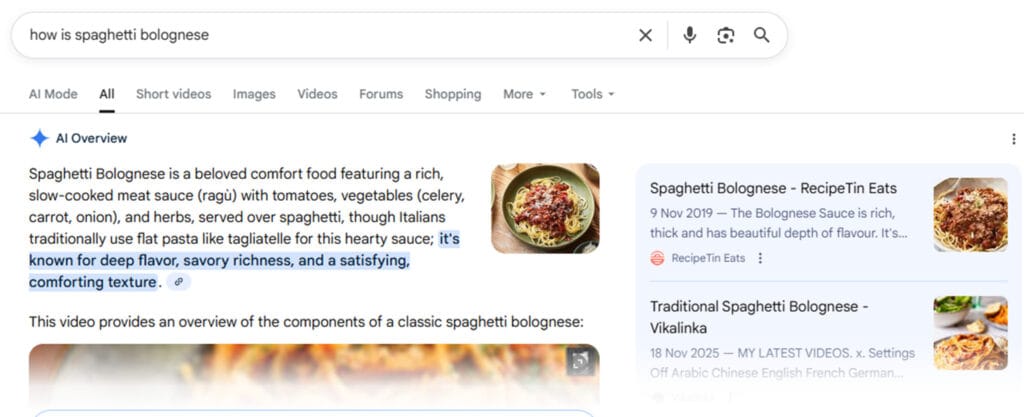
One industry-focused article claims that AIOs are reshaping the search landscape, reducing both organic and paid click-through rates (CTRs) and suggesting fewer branded/commercial clicks when summaries appear.
From a broader perspective, because AIOs answer informational queries directly on the search results page (SERP), many users don’t scroll or click anything, meaning paid ads may receive fewer impressions/clicks simply because users don’t reach them.
The overall decline in traditional organic CTR (for non-ads) when AIOs appear, e.g. a ~34.5% drop in top rank organic CTR per Ahrefs, suggests a broader shift in click behaviour. That shift likely impacts the entire SERP ecosystem, including ads.
In short, there’s credible evidence that, at least in some scenarios, AIOs reduce visibility and click likelihood across the SERP, likely including adverse effects on paid ad clicks.
Why it’s hard to quantify impact precisely
Most public studies focus on organic listings rather than paid ads. That means we lack large scale, independent, transparent data specifically showing how ad CTR or ad spend performance has changed post AIO rollout.
The impact appears to vary widely by query type/intent. AIOs are most often used for informational queries. Since those queries are usually less commercially oriented, they may have low ad spend anyway, meaning many AIO impacted searches may never have had ads relevant to them.
Even when AIOs appear for commercial queries, it depends on whether the ad is relevant and appears high on the SERP. And with SERP layouts shifting (ads being pushed lower), the relative impact will depend heavily on position, ad relevance, device (mobile vs. desktop), and other factors.
Some advertiser facing articles argue that while paid clicks may be down, there could be opportunities for new ad formats or placements (e.g. in AI-driven or hybrid result layouts).
What industry/advertisers are saying and thinking
Clients that rely heavily on bottom of funnel (commercial/transactional) keywords have a lower immediate risk because AIOs still primarily target informational queries. But they caution that as AIO coverage expands, advertisers may need to rethink PPC strategy. Broad match has become a go-to push strategy from Google’s “agency partner support services”; this approach would lead to a dramatic increase in ads showing and being clicked on irrelevant keywords.
Others say that the shift demands new approaches; brands may have to focus more on building authority, structured data, or brand recall to remain visible under AI-dominated SERPs, not only through ads but also through content.
From a strategic viewpoint, some argue that paid search is not “dead”, but it’s becoming more uncertain. Advertisers who adapt early (e.g. focusing on high intent long tail or harnessing new SERP ad real estate) may still find value, but overall ROI may be more volatile.
What this means for you (if you run/manage Google Ads)
If you’re targeting an informational or top-of-funnel audience (e.g., awareness, education, long-tail queries), expect a drop in click volume or ad engagement when AIOs start to appear.
For commercial/transactional queries, the impact may be lower (for now), but you need to monitor performance closely and perhaps shift budget towards high-intent keywords or branded keywords less likely to trigger AIOs.
Consider investing in brand-building, recognition, and trust (reviews, structured data, strong landing pages) features that may help your ads or organic presence stand out even when AIOs dominate.
Keep track of SERP layout changes, device usage patterns (mobile vs desktop), and metrics like impression share, ad position, and conversion rate not just click-through because lower CTR doesn’t necessarily mean lower conversions (if the remaining clicks are higher-intent).
What we don’t yet know (data gaps) what to watch out for
No large scale independent study (that I saw) with public data specifically tracking paid ad CTR / conversions pre vs post AIO rollout.
Little transparency (from Google or third-party tools) around how often ads even show when AIOs are present, or how many users ignore them vs scroll or expand.
Unclear how trends vary by industry, region, device type, and user demographics. What’s true for news/informational queries may not apply to ecommerce, B2B, or niche commercial queries.
Long-term effects, e.g. whether AIOs will gradually cover more commercial queries, or whether user behaviour will adapt (e.g. users learning to scroll past summaries), remain to be seen.
Because Google does not publish AIO-specific Google Ads metrics, we can build a model using observed changes in SERP behaviour from multiple studies (Ahrefs, Similarweb, Adthena, Semrush, Pew) and apply them to paid ads.
MODEL – Estimated Impact of AI Overviews on Google Ads Clicks (2025)
Below is a model you can apply to your own campaigns.
It estimates the % drop in paid CTR and clicks when an AIO is present on the SERP.
1. Observed behaviour when AIOs appear (baseline inputs)
Public datasets consistently show:
A. Users click much less on the SERP overall
Organic CTR falls 30–50% when AIO appears (Ahrefs, Pew).
B. Fewer users scroll
Session ends are ~10–20% more likely when an AIO appears (Pew).
C. Ads are often pushed below the fold
Adthena reports “significant loss of above-the-fold visibility” for ads when AIOs render.
D. AIOs predominantly appear on informational queries
These already have lower commercial CTR, amplifying the effect.
Conclusion: Paid ads likely lose a similar or slightly greater share of clicks than organic links due to lower scroll depth + reduced attention.
2. Deriving the Ads Impact Multipliers
We can build a realistic multiplier set:
| Factor | Observed Effect | Impact On Ads |
| Reduced overall clicking | 35–50% | Ads likely 30–45% CTR |
| Reduced scrolling | 10–20% | Ads lose visibility → 10–20% CTR |
| Informational query bias | Medium | Ads triggered here drop more (30–60%) |
| Commercial queries | Low AIO coverage | Ads only slightly affected (0–10% drop) |
3. Final Estimated Impact Model (Recommended)
When an AI overview appears
CTR impact (paid search ads):
High-confidence estimate:
25% to 45% CTR drop
Aggressive scenario (if ads pushed fully below the fold):
50% to 65% CTR drop
Commercial/transactional queries:
0% to 15% (because AIO rarely triggers here)
4. Click-volume impact (paid search):
Adjusting for both CTR drop + lower impression depth:
Expected drop:
20% to −40% clicks
Worst case:
45% to −60% clicks
5. Cost impact (CPC, CPA, ROAS):
CPC may rise 5–20% because:
- Lower available ad inventory per query
- Competition shifts to fewer commercial keywords
- CPA is likely to rise 10–30% where AIO coverage is strong.
Example: Apply the model to a real campaign
Let’s say your keyword set has:
- 100,000 impressions/month
- 3.0% CTR
- 3,000 clicks
- £1.20 CPC
£3,600 monthly spend
Assume 20% of your impressions now have AIO.
Step 1: Segment impacted impressions
20,000 impressions face AIO
80,000 impressions normal
Step 2: Apply CTR drop to AIO impressions
If CTR falls 40%, 3.0% becomes:
3.0% × 0.60 = 1.8%
Step 3: Recalculate clicks
Normal impressions: 80,000 × 3% = 2,400 clicks
AIO impressions: 20,000 × 1.8% = 360 clicks
Total new clicks = 2,760 (down from 3,000)
Net click loss:
8% overall, even with only 20% AIO penetration.
If AIO rises to 50% of impressions, total clicks drop 20–25%.
To assess real AIO damage, check
Metrics that will fall if AIO is hurting your ads
- CTR drops for top-of-funnel keywords
- Impression share (top) drops
- “Absolute top impression share” drops
- Scroll-dependent formats underperform
- Impressions stay stable, but clicks fall
Metrics that won’t drop even under AIO
- Conversions on high-intent keywords
- Branded CTR
Metrics that will potentially increase if AIO is hurting your ads
- Average CPC
- Impressions
Will AI Overviews Hurt Google Ad Revenues
Yes, if AI Overviews reduce clicks on Google Ads, then logically this should hurt Google’s ad revenue.
But the full picture is more complicated, and Google has several mechanisms that may delay, offset, or even reverse the revenue impact.
Does reduced ad clicking = reduced ad revenue?
Yes. Google makes the majority of its revenue from paid clicks.
If users click fewer ads:
Revenue = clicks × CPC → goes down
And since AI Overviews reduce scrolling and clicking (including on ads), this creates a direct threat to Google’s core business.
Multiple behaviours support this:
Users click 30–50% fewer results (organic + paid) when AIO appears (Pew, Ahrefs).
Ads are pushed below the fold, significantly reducing visibility (Adthena).
Fewer users scroll after seeing the AI answer → fewer ad exposures.
AIO is most common on informational queries, which often have ads, meaning ad clicks can really fall.
So yes: the mechanism is real.
If everything stayed equal, this would hurt Google’s revenue.
Then why is Google still pushing AI Overviews?
Google is playing a long game and has multiple counter-strategies that may protect or even increase ad revenue.
Here are the key ones:
Google will place ads inside or around AI Overviews
Google has already begun experimenting with:
Ads embedded inside AI answers
Sponsored citations
Ads placed between AIO paragraphs
Ads inside “AI-organised result clusters”
If Google shifts ads into the AIO block itself, then:
AIO becomes new premium ad real estate → potentially higher CPC
This could increase, not decrease, revenue long-term.
Google controls the auction fewer clicks may mean higher CPCs
If click supply goes down and advertiser demand stays the same or increases, then CPC’s will rise to fill the gap.
We already see signs of this:
CPCs climbed 10–20% YoY in 2024–2025 for many industries, despite flat or falling click volumes.
So even if clicks drop 20–30%, higher CPCs may protect total revenue.
AIO may shift revenue from Search Ads → Performance Max & Shopping (still Google Ads)
Google increasingly pushes advertisers into:
- PMax campaigns
- Shopping ads
- AI-generated ad assets
These formats are less SERP dependent, meaning:
- Less vulnerable to zero-click search
- More automated and profitable for Google
Higher CPCs overall
So, Google may reduce revenue from search text ads but increase revenue from automation driven campaigns.
AI Overviews increase “stickiness”, meaning users stay on Google for longer
Even if users don’t click, they remain inside the Google ecosystem:
- Google can show more ads during subsequent actions.
- Google can gather more behavioural data.
- Google can introduce paid AI features later (e.g., AI subscriptions, premium enterprise search)
This improves long term monetisation.
So, will Google’s revenue go down? (Realistic scenarios)
Here’s how analysts are modelling it:
Scenario 1: Short-term revenue dip (most likely in 2025–2026)
- AIO reduces visibility and clicks on classic search ads
- Google hasn’t fully integrated ads into AI answer blocks yet
- Advertisers see drop in PPC returns, shift budgets cautiously
Outcome: Revenue growth slows, possibly dips for search only formats.
Scenario 2: Revenue neutral (Google compensates)
- Higher CPCs
- More PMax adoption
- Stronger ad placement inside AIOs
Outcome: Total ad revenue stays stable even with fewer clicks.
Scenario 3: Long-term revenue increase (Google’s real plan)
Once Google fully monetises AIO (ads inside answers), they unlock:
- New, premium, high-intent ad inventory
- Higher predicted CTR on contextual ads inside the AI summary
- A new ad surface that competitors can’t easily copy
Outcome: Google Search becomes a hybrid AI + ad engine with higher revenue per search. This is almost certainly the monetisation path Google is targeting.
What will happen with Google, AI overviews, and Google Ads is going to be incredibly dynamic over the next 12 months. Watch this space; our predictions may be right, wrong, or somewhere in the middle. That’s the beauty of forecasts.

Need help with your website and marketing?
Book a FREE growth strategy session with our experts
Our award-winning team will review your website and marketing goals to provide you with crucial insight and advice.

4.9 STAR
Google reviews
With 10+ years of experience, Link Digital has helped hundreds of businesses to succeed online. We can help yours too!